September 9, 2025

How to Design an Adaptable Family Home: Practical Tips for Flexible Living
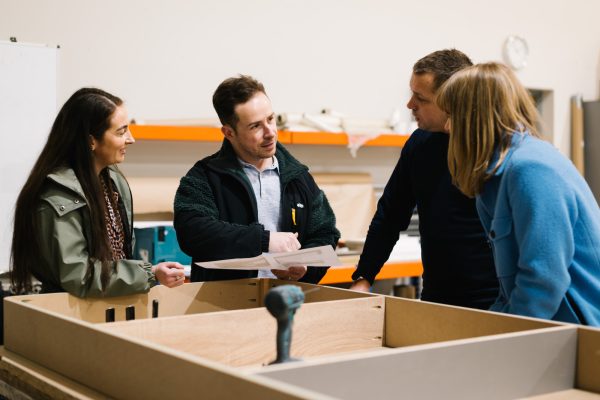
Designing a family home that can evolve over time is not just about futureproofing. It is about creating a space that feels right for today, while preparing for what is to come. At Lewis Knox, our work on Rectory House became a living example of this approach. Shaped over two years in close collaboration with a young family, it is a home built around flexibility, comfort and long-term thinking.


Here are the design principles we used to help make the home truly adaptable.

1. Build in Flexibility from the Start


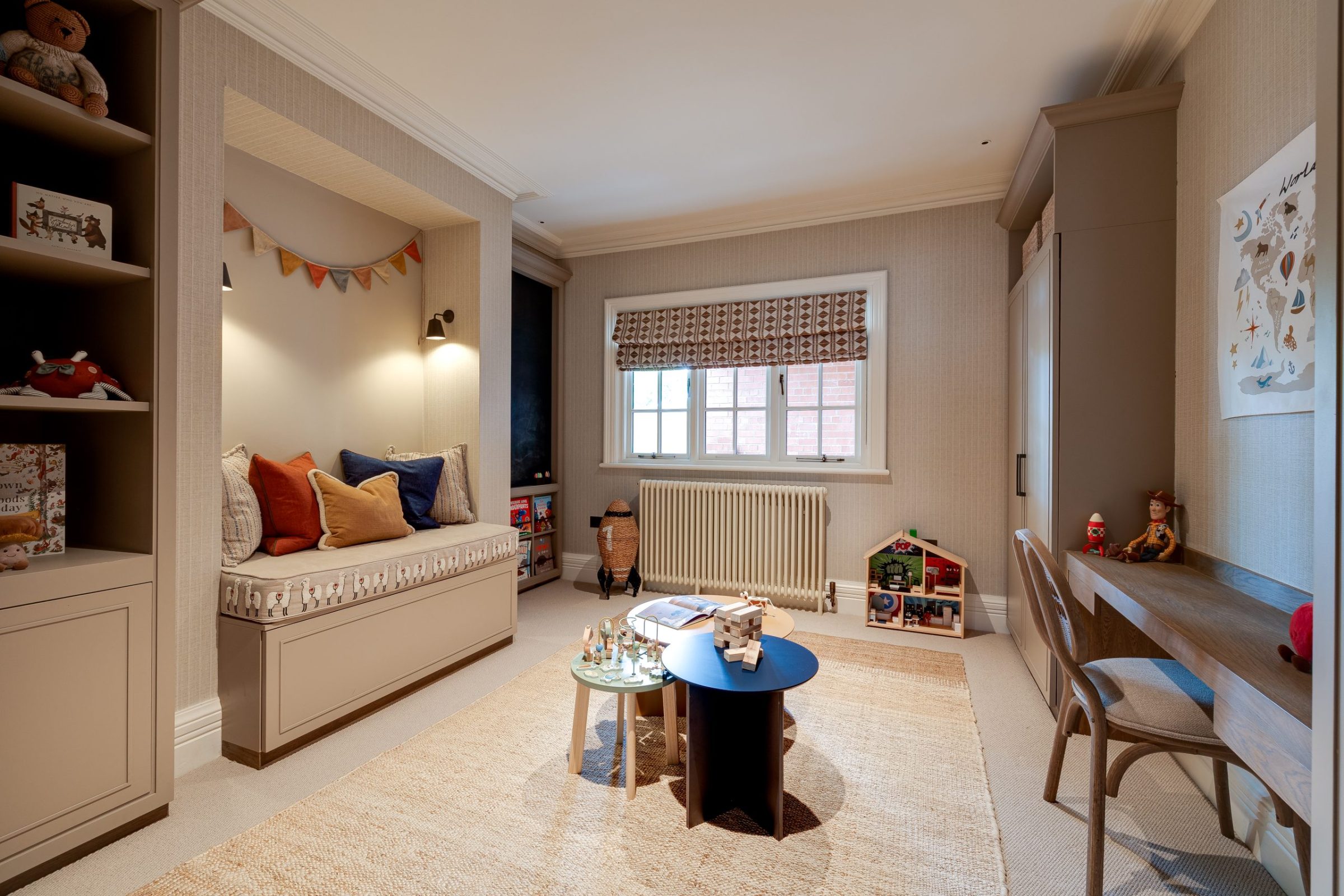
Bedrooms were approached with long-term use in mind. What began as welcoming guest spaces were designed to later transition into nurseries, using built-in joinery and calm, neutral palettes. By avoiding trend-led finishes and focusing on thoughtful detailing, these rooms remain open to flexibility as the family’s needs evolve.
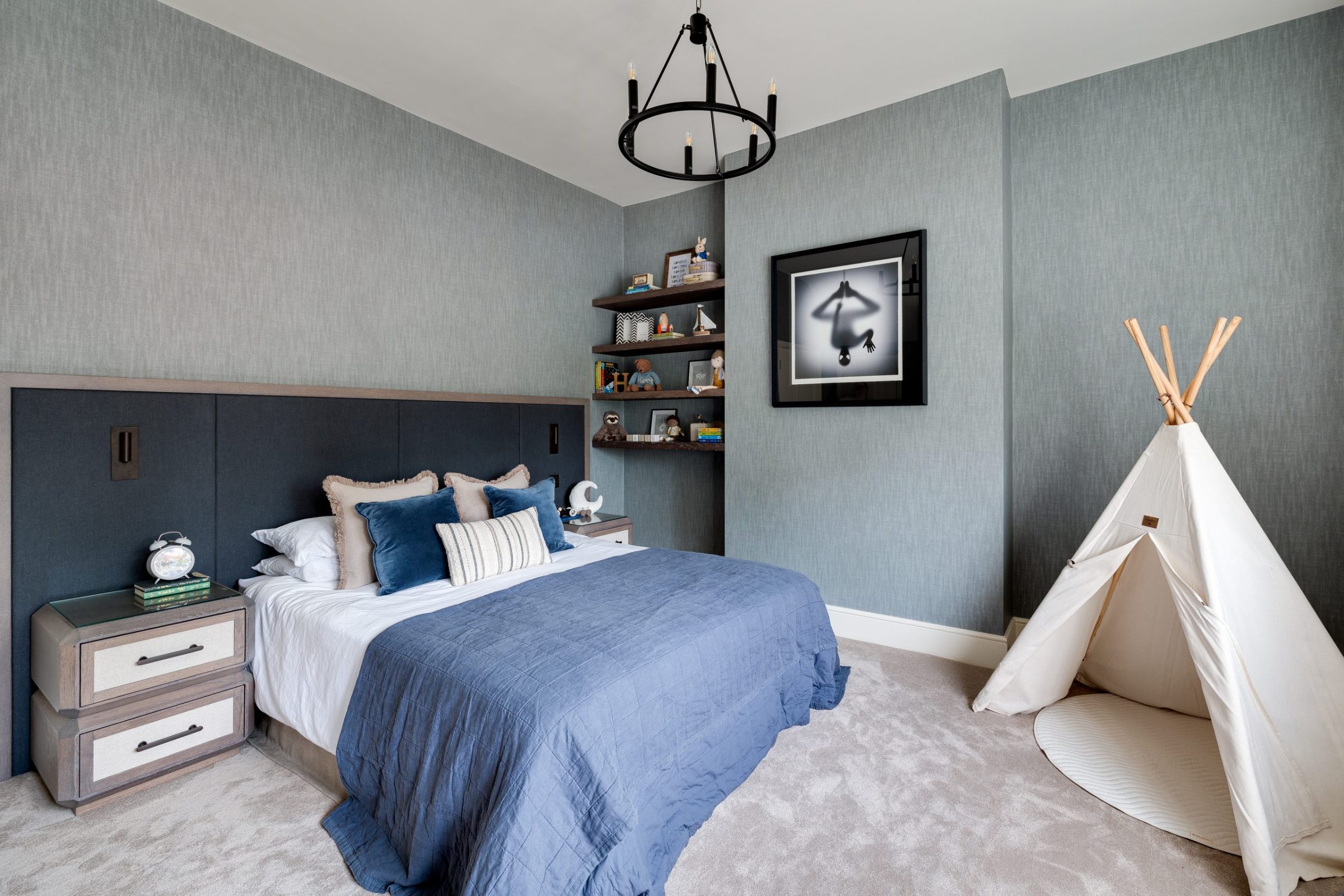
Neatly styled child's bedroom with a navy upholstered headboard and a bed dressed in white sheets and a blue quilt topped with blue and beige cushions, a wooden bedside table with an alarm clock, built‑in shelves holding toys and books, a framed abstract silhouette on the wall, a black metal chandelier above and a white canvas teepee in the corner.
Cozy children's playroom featuring a built-in window seat with patterned upholstery and colourful cushions beneath a wall lamp and bunting, a central play area with small round tables and wooden toys, shelving and toy storage, a patterned Roman blind over the window and a wooden desk with more toys against neutral textured walls.
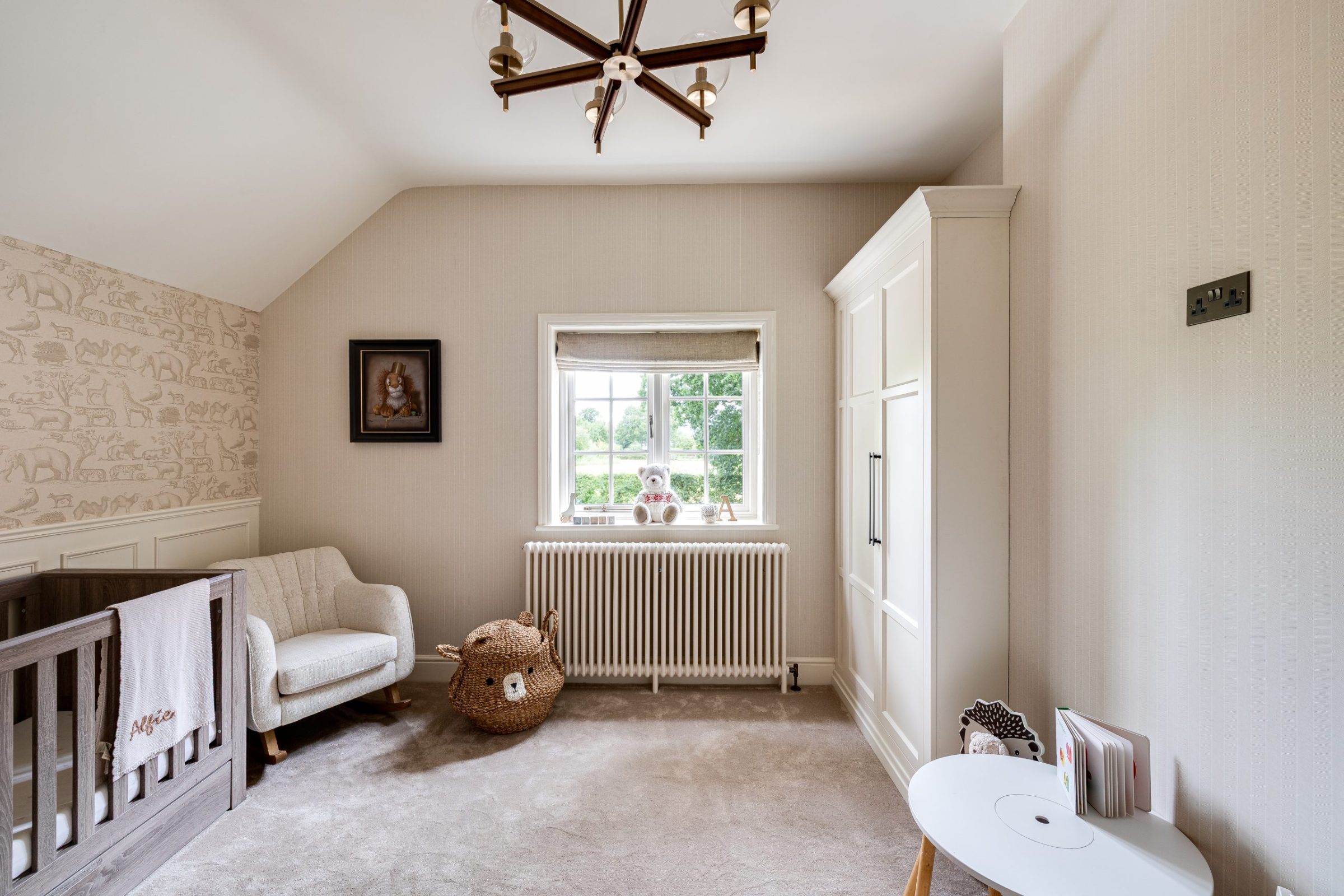
Neutral-toned nursery with a wooden cot and upholstered armchair to the left, a small window above a white radiator holding a teddy, a woven bear-shaped toy basket on the carpet, a white built-in wardrobe to the right and subtle animal-print wallpaper on the far wall.
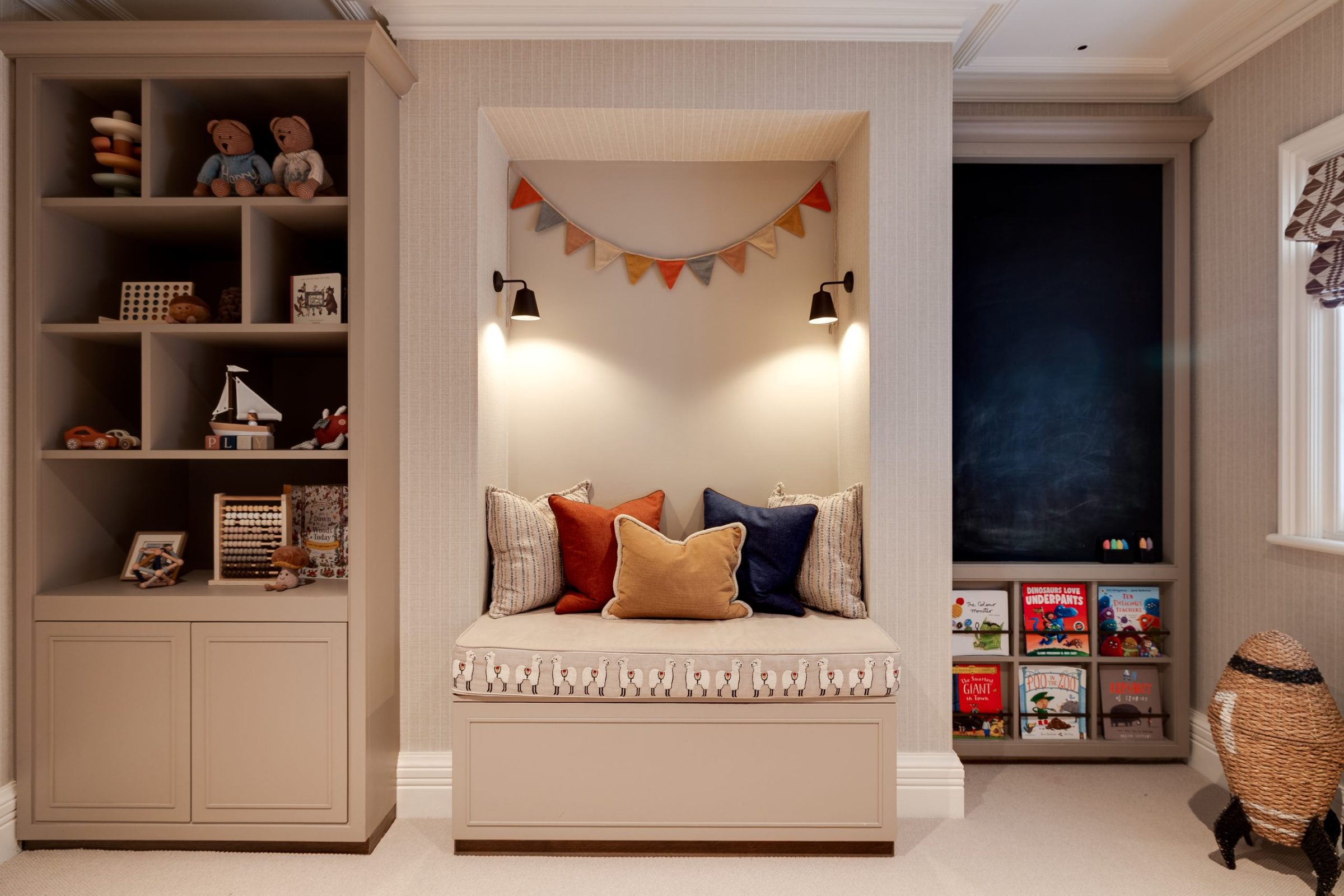
Cozy built-in children's reading nook in soft beige with a cushioned bench covered in patterned and coloured throw pillows, triangular fabric bunting overhead and two wall-mounted reading lamps, flanked by shelves of toys and books and a chalkboard panel to the right.

2. Create Rooms That Offer Comfort and Retreat

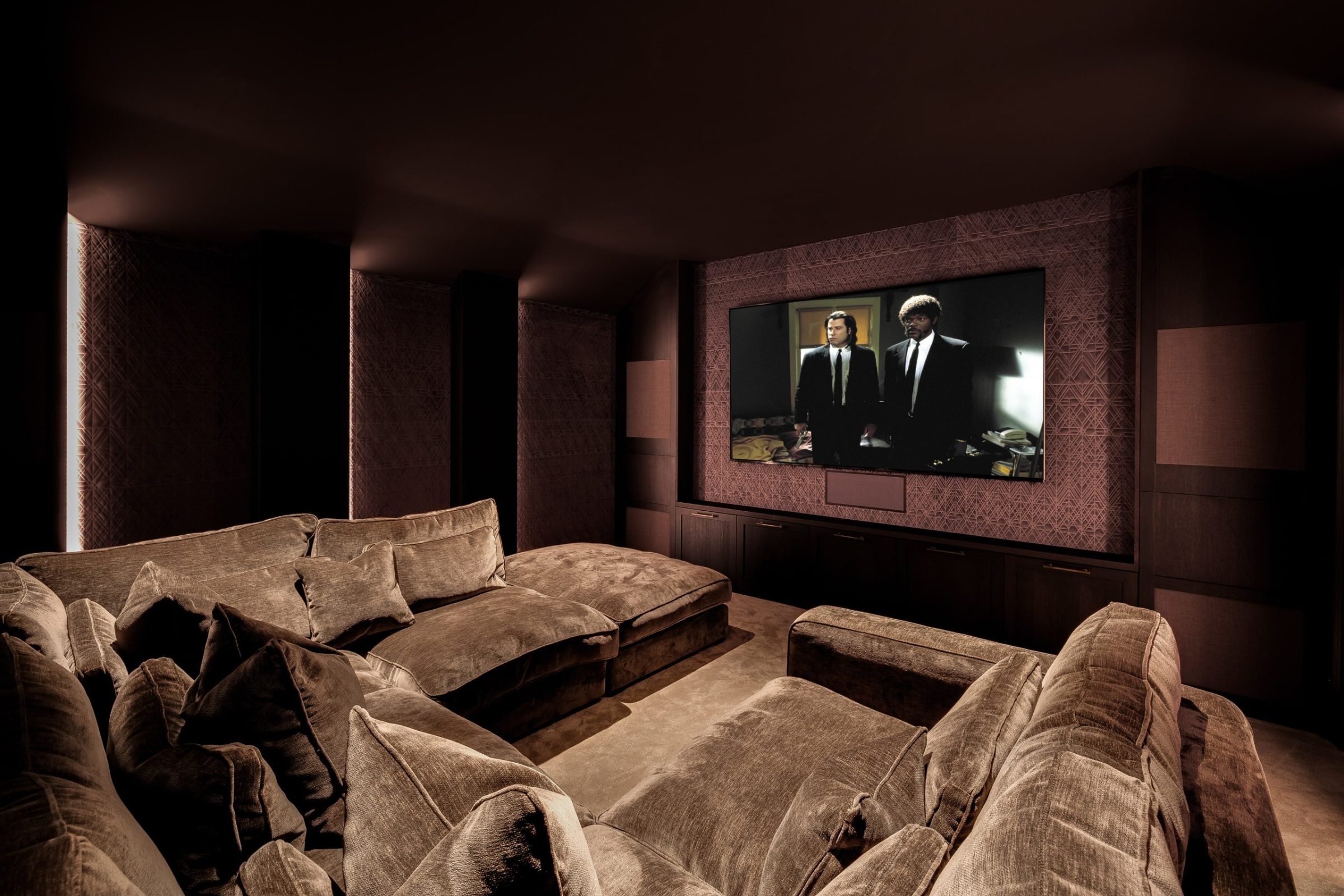
A sense of balance matters in a family home. The main bedroom was designed as a quiet retreat, with layered textures and a pared-back palette that feels calm but not minimal. Elsewhere in the house, a private cinema room sits behind panelled joinery, offering a space to pause and switch off. These moments of stillness help counterbalance the sociable flow of the home.
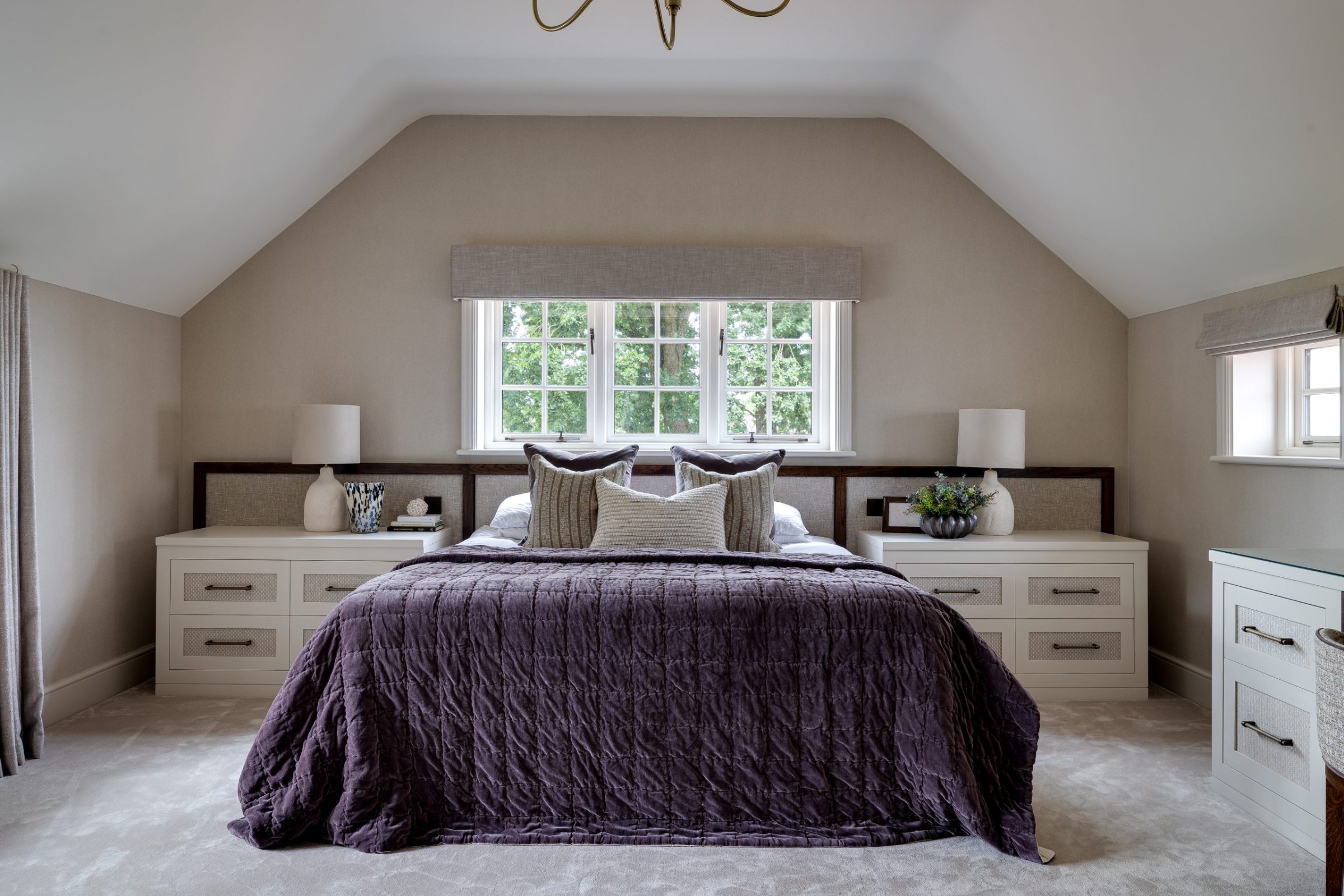
Attic bedroom with a deep‑purple quilted bed and layered neutral cushions centered beneath a six‑pane window with a linen valance, flanked by matching cream bedside cabinets and lamps against pale beige walls and a sloping ceiling.
Dimly lit home cinema with deep brown textured walls and oversized plush velvet sofas facing a large wall-mounted screen showing a movie scene of two men in black suits.

3. Make Room for Connection

Adaptable homes need to serve both stillness and sociability. To balance the private, quieter spaces elsewhere in the house, the heart of this home was designed to bring people together. A generous kitchen flows directly into a tailored bar and games room, forming a central hub where the family can gather and entertain. Moody tones in the games room add depth and atmosphere, while the bar provides a purposeful focal point for shared moments.
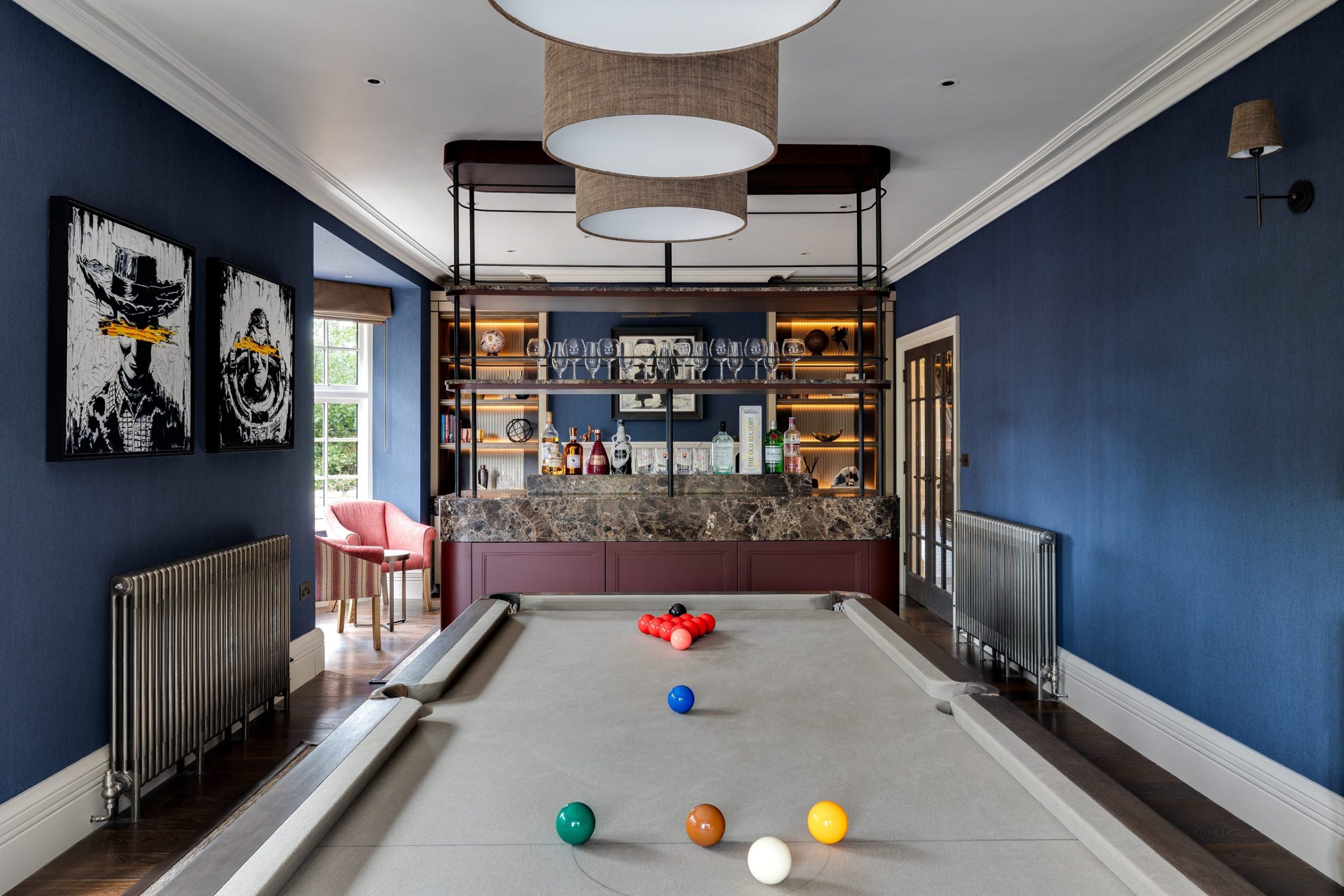
A grey-felt pool table with coloured balls in play fills the foreground of a stylish games room featuring navy-blue walls, a marble-topped bar with glassware and bottles, pendant lamps overhead, framed black-and-white artworks on the left wall and a pink armchair by a window.
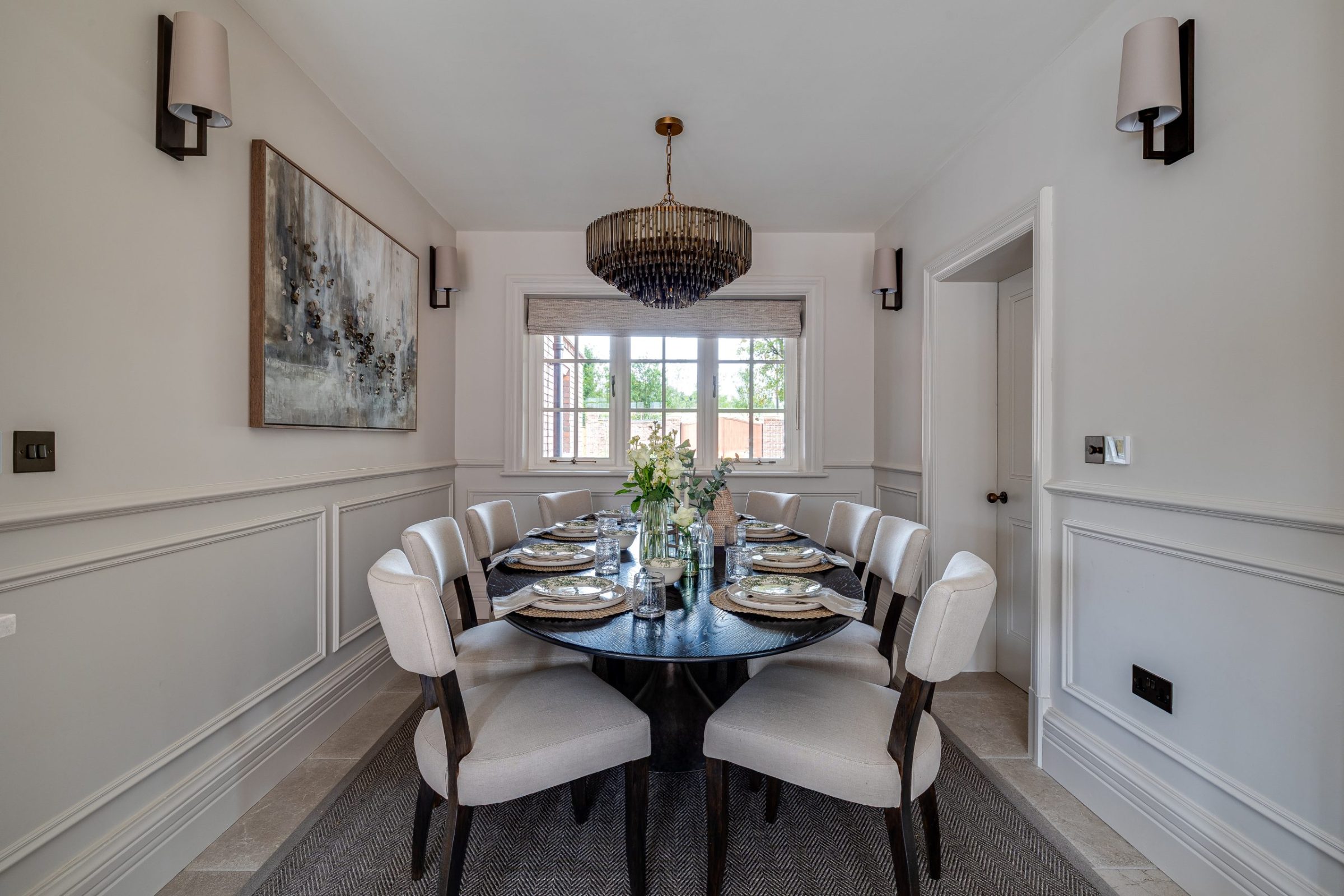
Formal dining room with an oval dark-wood table set for ten with place settings and glassware, cream upholstered chairs, a central tiered chandelier, a window at the far wall, neutral panelling and a large abstract painting.
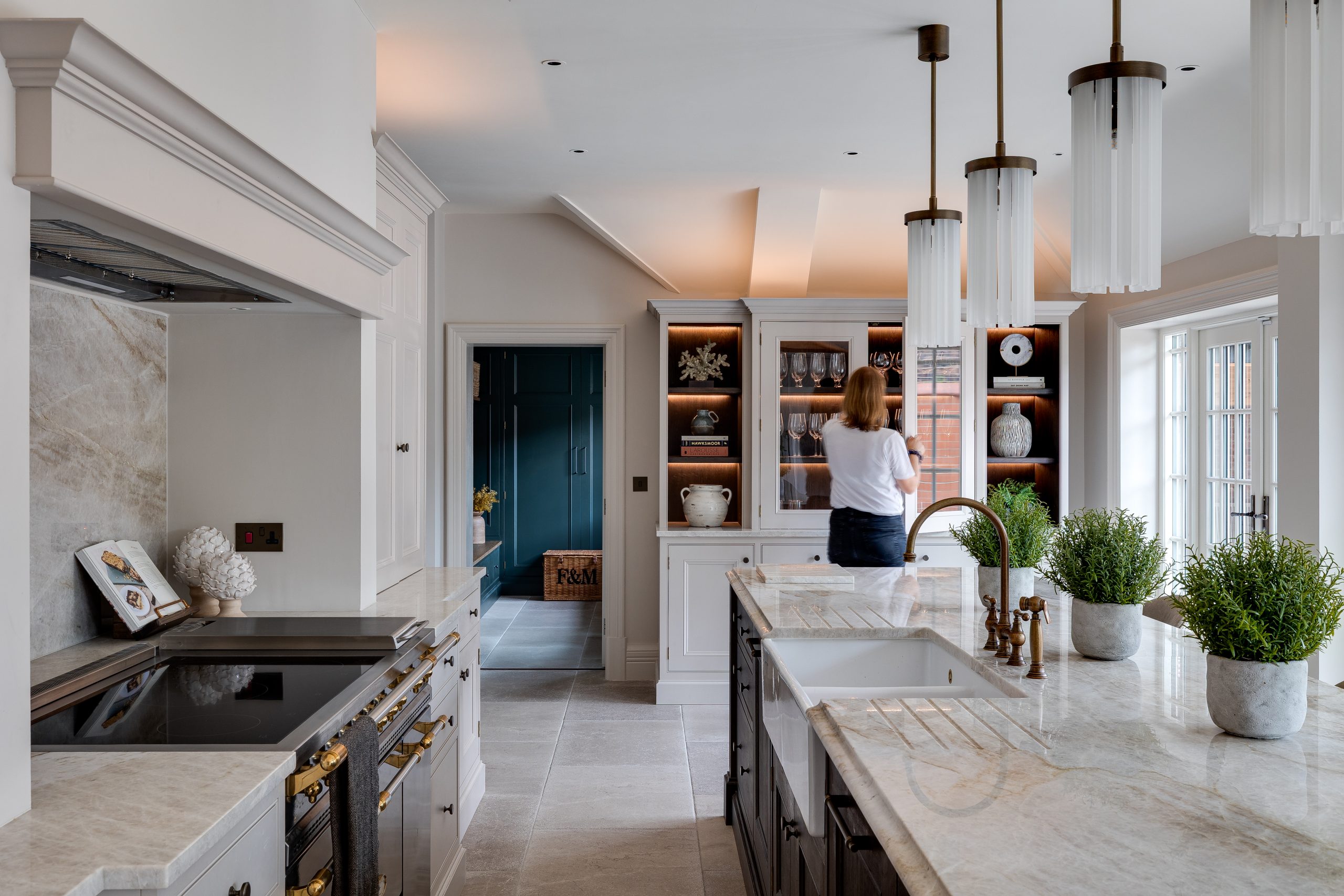
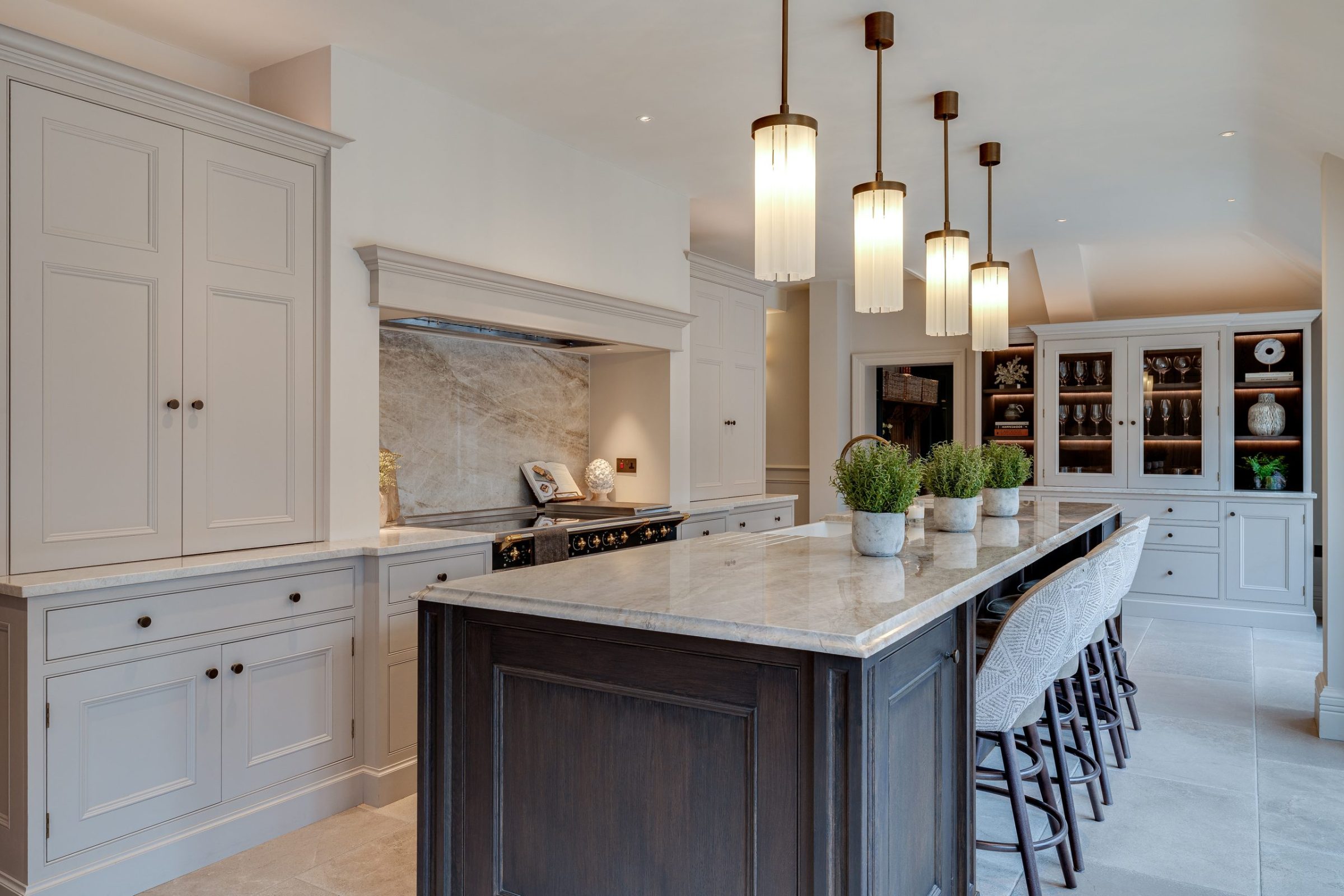
Bright contemporary kitchen with a large marble-topped island holding potted herbs, dark wood island base and upholstered bar stools under hanging cylindrical pendant lights, flanked by cream cabinetry, a range with a marble backsplash and glass-front display cabinets.
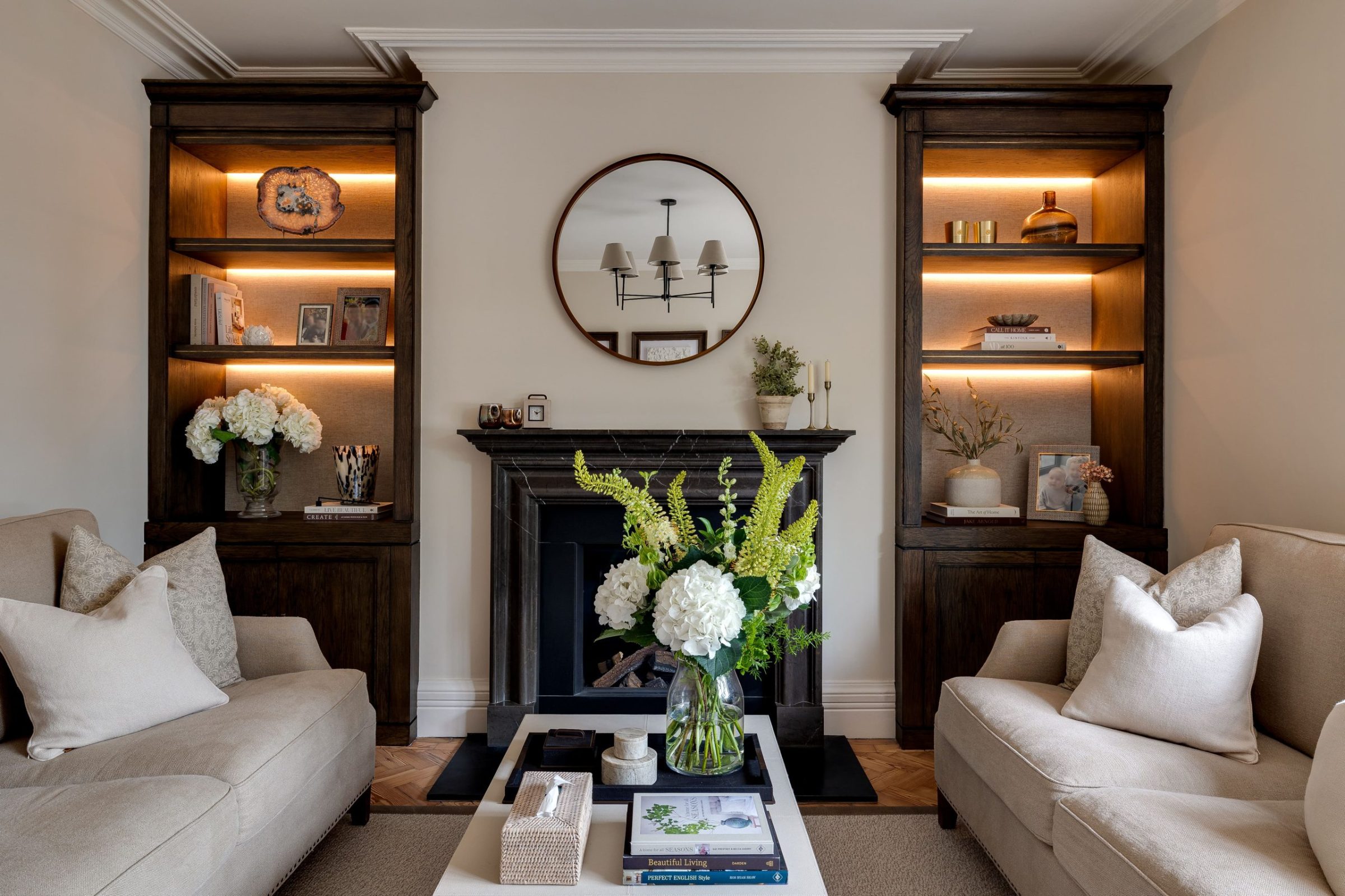
Symmetrical living room centred on a dark marble fireplace with a round mirror above, flanked by backlit dark-wood built-in shelves, neutral beige sofas with patterned cushions and a coffee table holding a glass vase of white hydrangeas and greenery.

4. Think Practically About the Day-to-Day

Adaptable homes work hardest in the background. The utility and boot room were designed to bring quiet structure to the family’s daily rhythm. Both are practical and warm, with storage and material choices that feel naturally integrated into the home. Their simplicity, durability and use of timeless finishes mean they will continue to serve well as the family’s needs evolve.


The study was created with a softer, more feminine character. It offers privacy and focus while remaining visually connected to the surrounding spaces. Its gentle palette and tailored layout make it easy to adjust over time, whether for work, reflection or something entirely new.
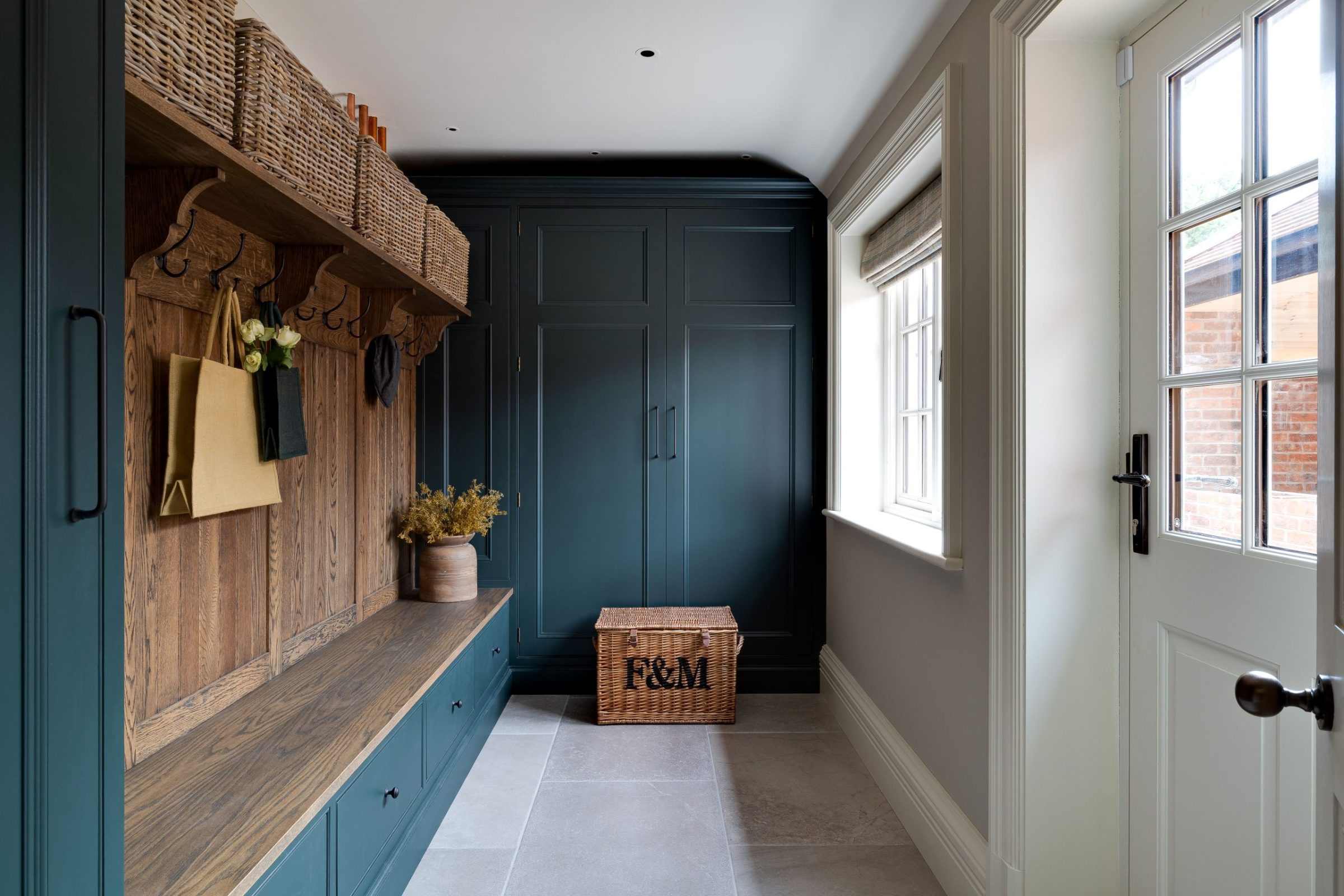
A tidy mudroom with deep teal built-in cupboards and a wooden bench, wicker storage baskets on a shelf, wall hooks holding tote bags and a hat, a vase of dried flowers, and a wicker F&M chest on the stone floor beside a windowed door letting in daylight.
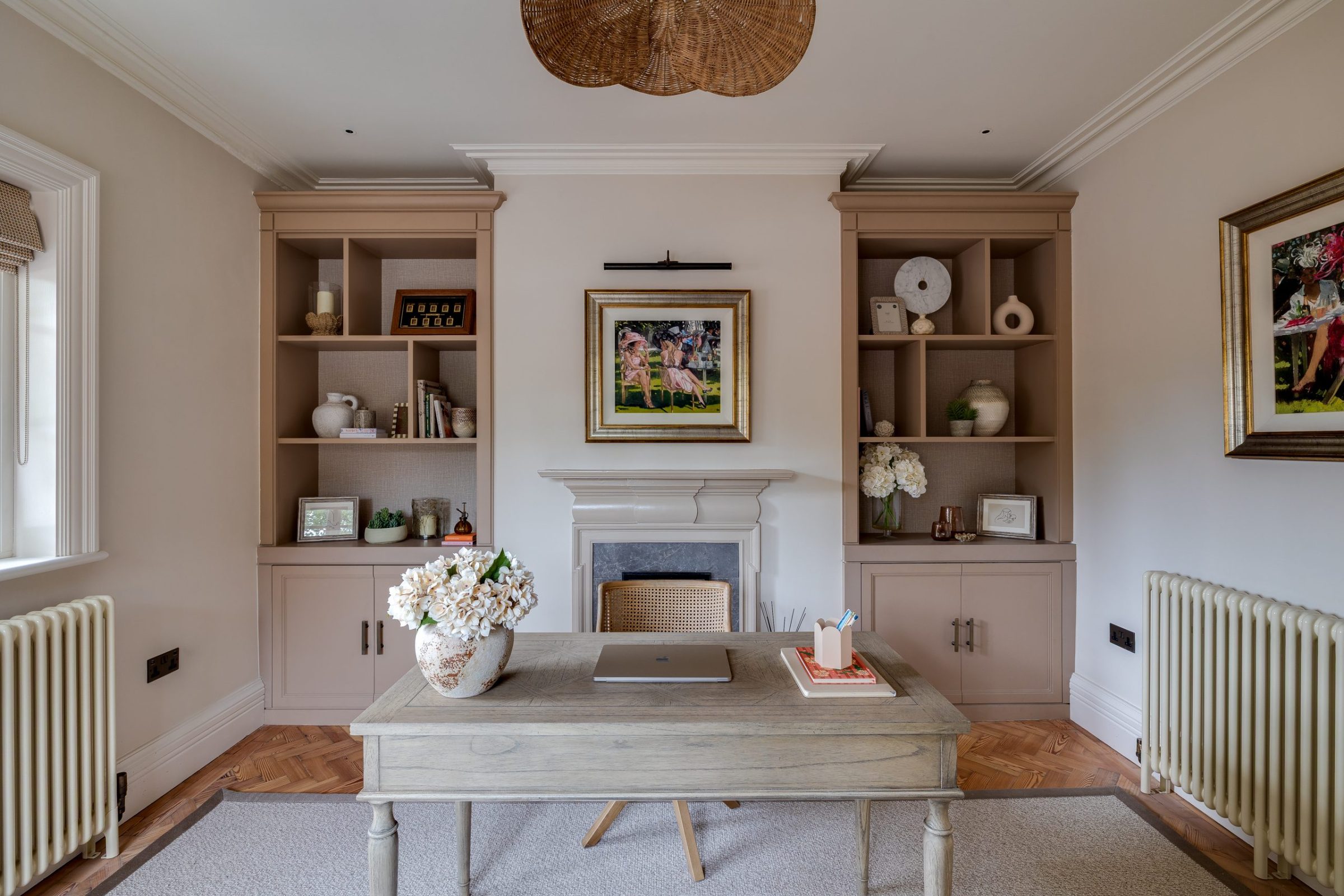
Home office with a wooden desk holding a weathered ceramic vase of white hydrangeas, a closed laptop and stacked notebooks, facing a fireplace topped by a framed painting and flanked by symmetrical beige built‑in shelves filled with pottery, books and decorative objects under a woven rattan ceiling light.
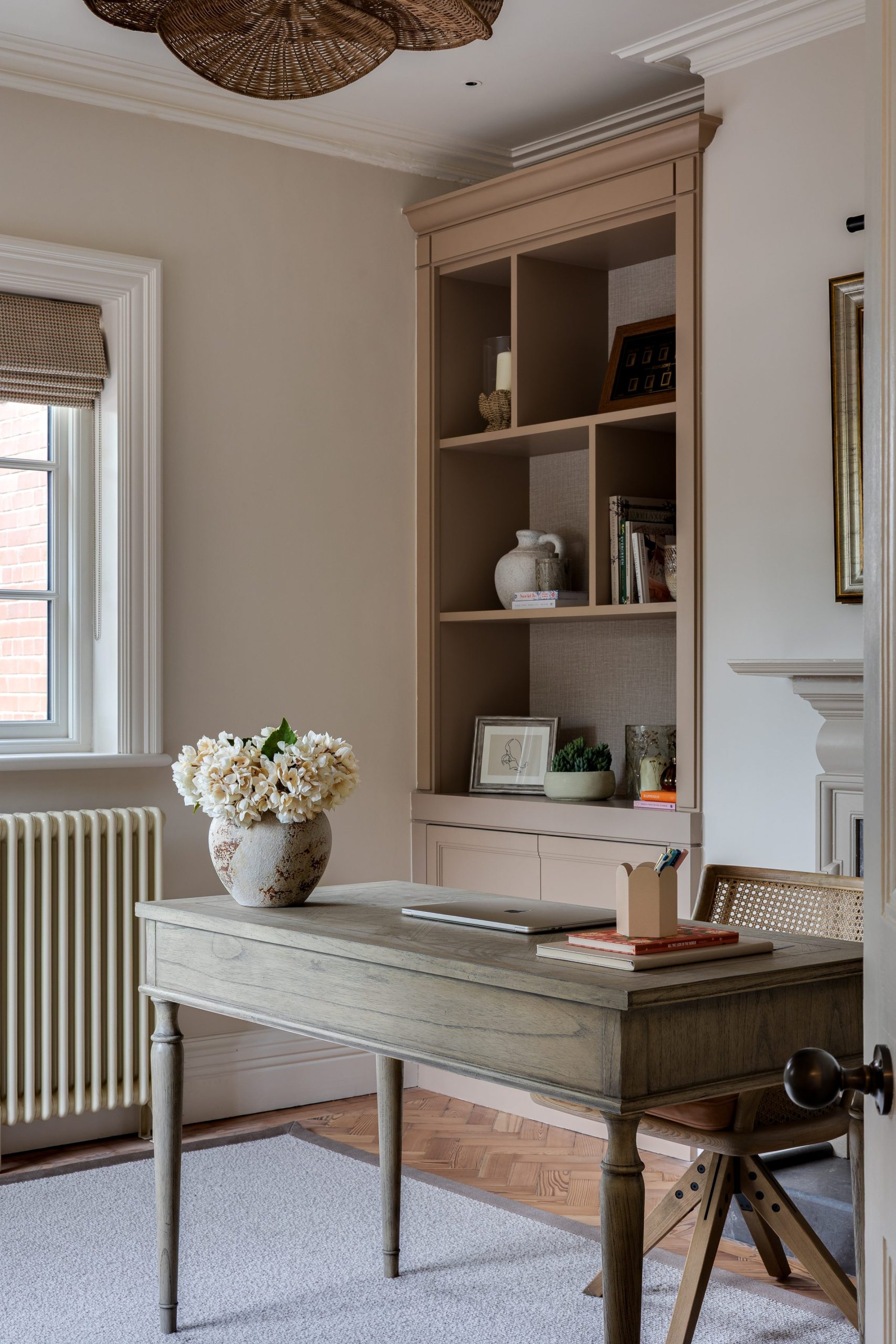
Light-toned wooden desk in a neutral-coloured home office topped with a rustic vase of white hydrangeas, a closed laptop and stationery, set before built-in beige shelving filled with books and ceramics, with a cane chair and a window with a woven blind nearby.
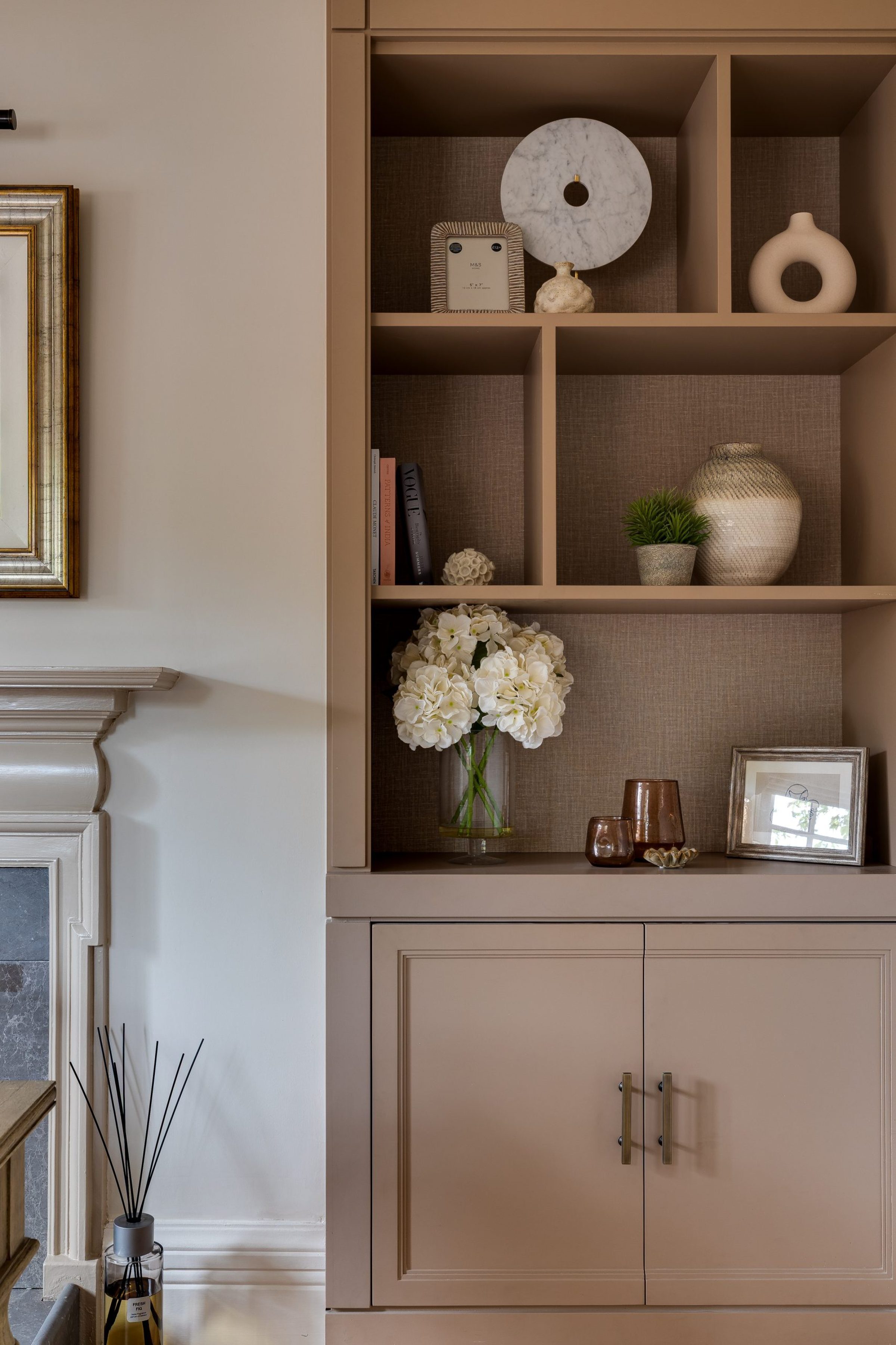
Beige built-in shelving filled with neutral decorative objects: a large round white marble disc, a small textured photo frame and ceramic sculptures on the upper shelves, a two-tone woven vase and a small potted green plant in the middle, and a glass vase of white hydrangeas with amber glassware on the lower shelf, a pale mantel visible to the left.

5. Use Materials That Support Change and Connection

Choosing the right materials is one of the most effective ways to create a home that feels cohesive and ready to evolve. In this project, a consistent palette of warm neutrals, natural wood tones and gentle textures was used to bring consistency across all rooms. This created a sense of connection between spaces, even as their functions varied.


The bathrooms followed the same approach. Natural stone, bronze detailing and layered lighting were chosen for their timeless quality and tactile appeal. These finishes create rooms that feel restful and refined, while remaining easy to update or adapt over time. When materials are both durable and expressive, they help the home grow and shift without losing its sense of identity.
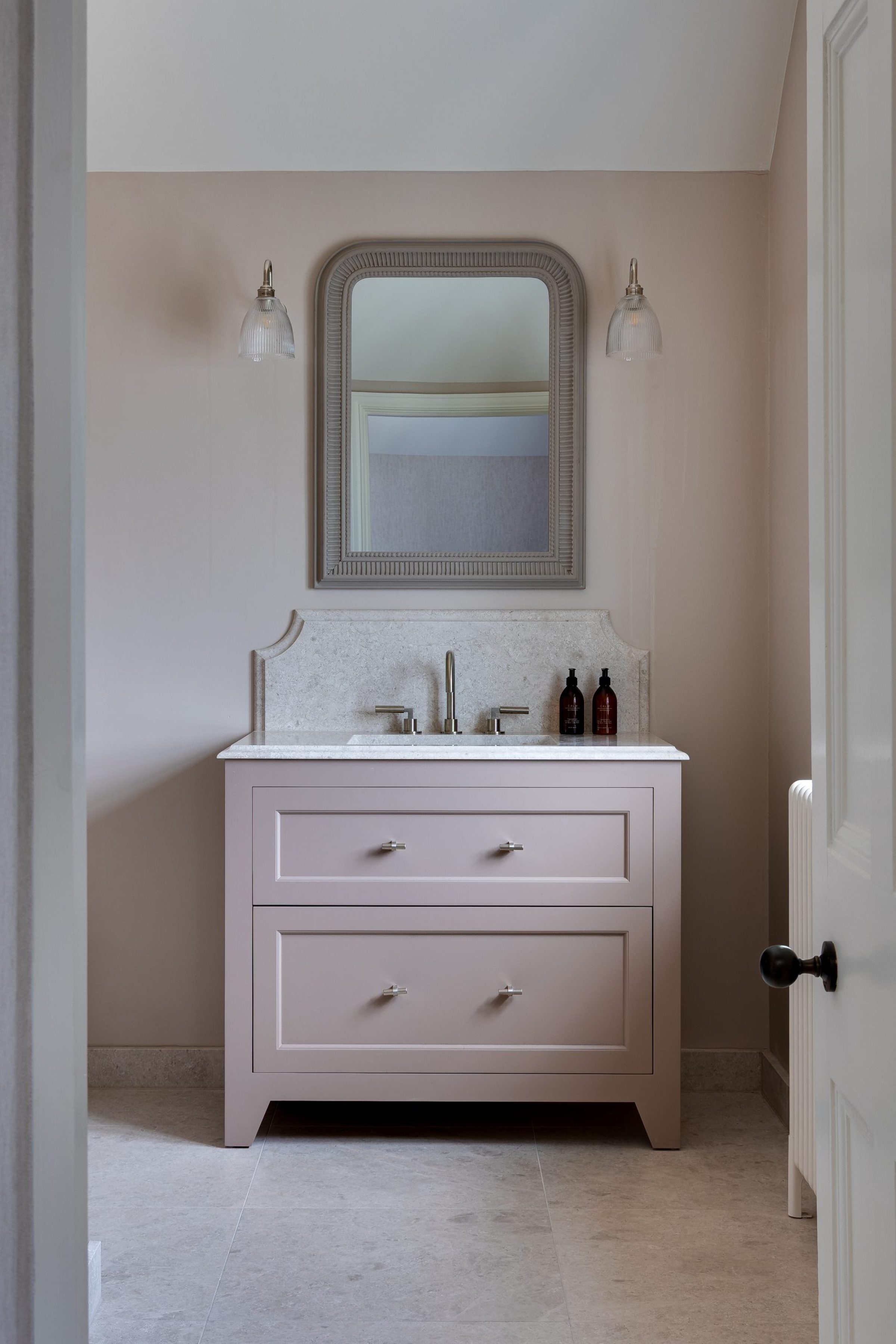
Muted pink vanity with marble top, central rounded-rectangular mirror in a carved grey frame, two ribbed-glass wall sconces, a chrome faucet and two amber soap bottles on the counter.
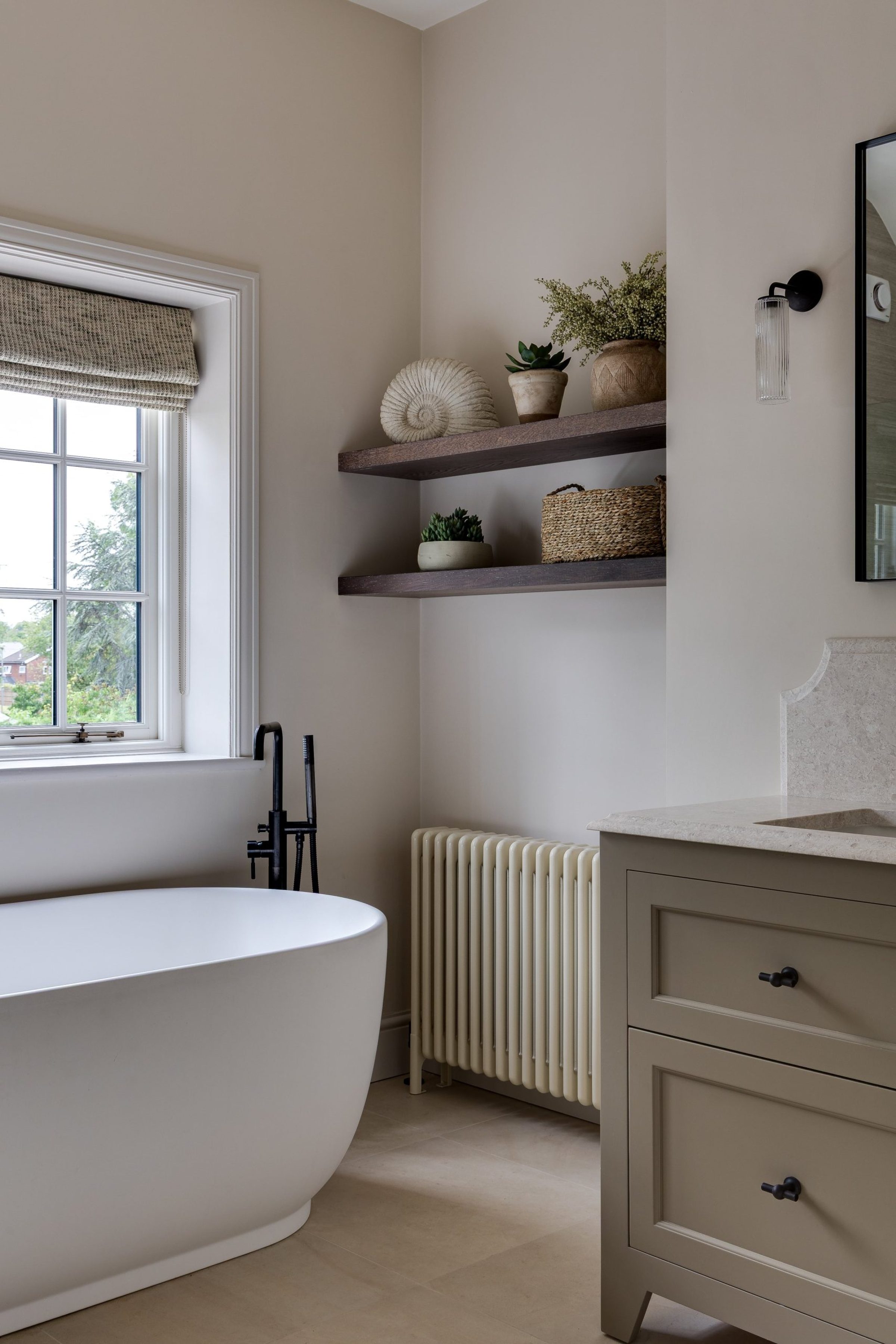
Neutral-toned bathroom with a white freestanding bathtub by a window, two dark floating shelves displaying potted plants, a spiral shell ornament and a woven basket, and a beige vanity with stone countertop, radiator and a black glass wall sconce.
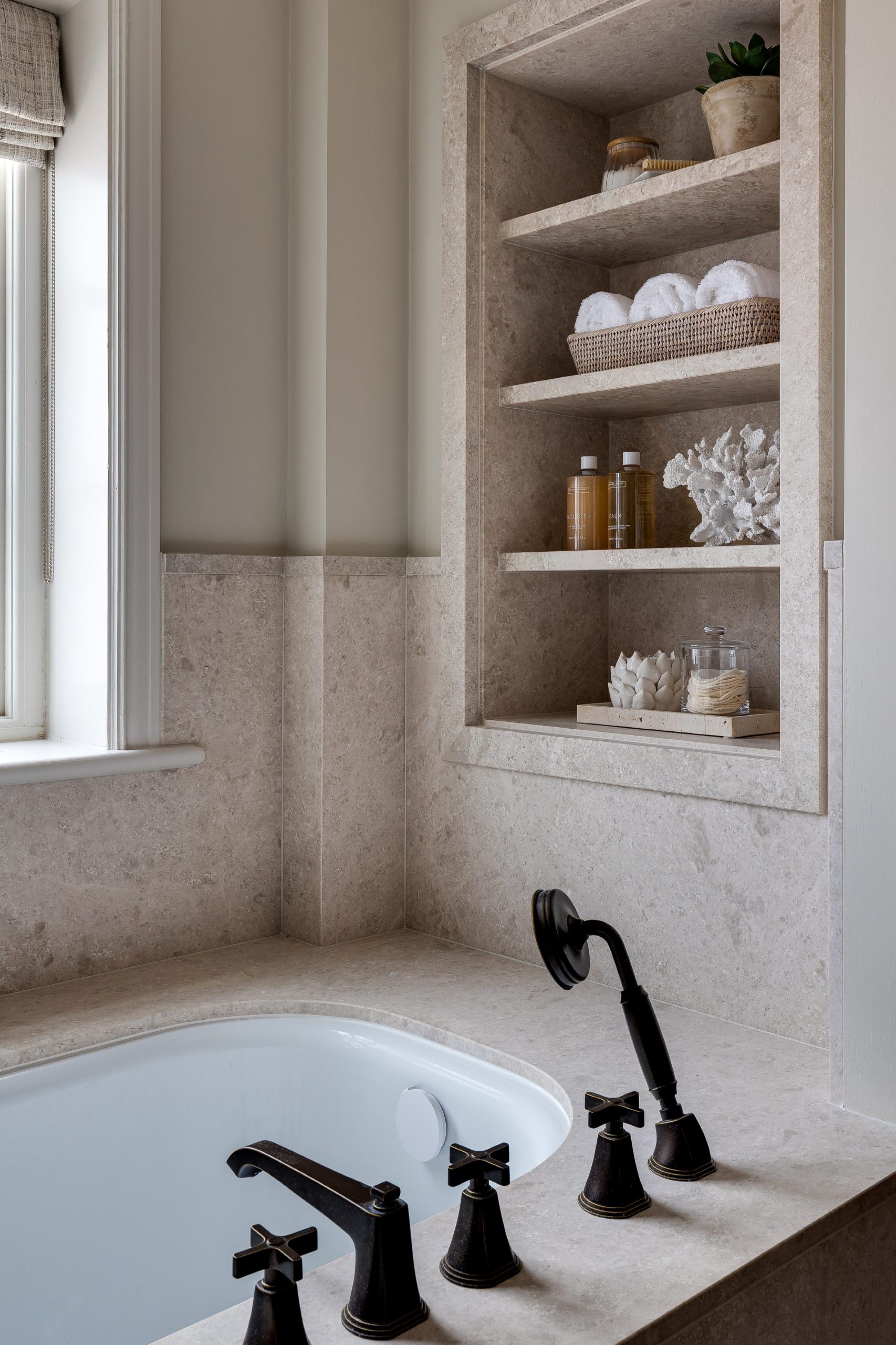
Built-in stone shelving beside a window above a stone-clad bathtub, holding a wicker basket of rolled white towels, amber toiletry bottles, decorative white coral and a potted plant, with dark bronze faucet fixtures in the foreground.
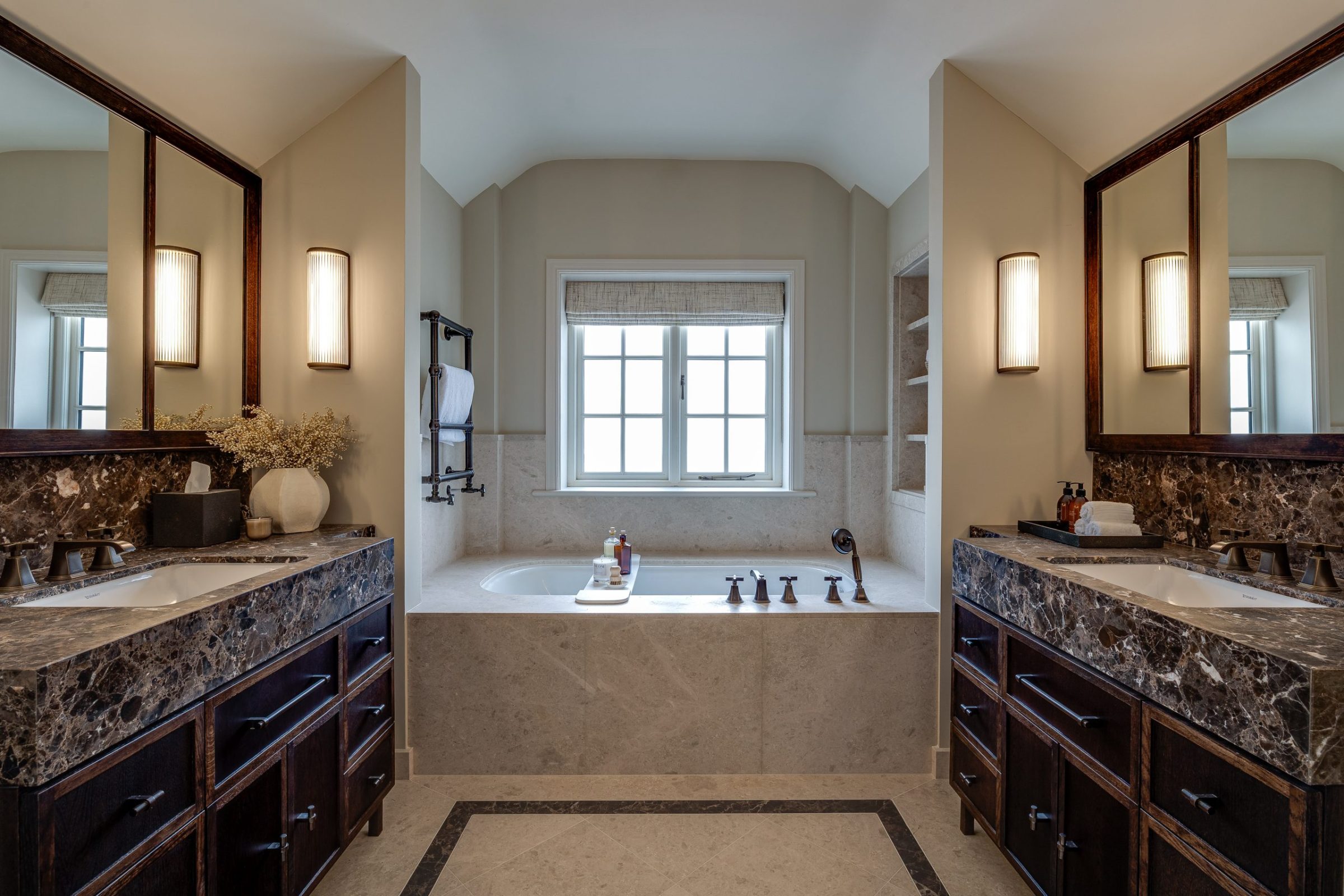
Symmetrical luxury bathroom with a central built‑in bathtub beneath a mullioned window, flanked by dark marble double vanities and mirrors, vertical wall sconces and bronze fixtures.

Start Your Own Project

Designing a home that adapts means thinking beyond today’s needs. Whether you’re renovating, reworking your layout or creating a space for a growing family, we’d love to hear what you’re planning.


Ready to get started? Get in touch today to explore your ideas.

Share this article

Lewis Knox Nominated for The Grafters Awards 2025

Read more

How Interior Designers Charge – Our Transparent Guide

Read more

Interior Design for New Build Homes: Creating Character and Comfort from Scratch

Read more

Sign up to our newsletter